Trying to choose between a Cambridge condo and a Somerville condo? At first glance, the answer can seem obvious: Cambridge is pricier, Somerville gives you more space. But when you look closely at actual condo data, the gap is narrower than many buyers expect. If you are weighing budget, commute, building style, and day-to-day fit, this side-by-side breakdown will help you compare the markets more clearly. Let’s dive in.
Cambridge vs. Somerville condo prices
If you compare closed condo sales year to date through March 2026, Cambridge still comes in higher. The median condo sales price was $913,000 in Cambridge versus $850,000 in Somerville, according to Massachusetts Association of Realtors data.
That said, the difference is not as dramatic as broader city headlines might suggest. For condos, the gap is about $63,000, which is much tighter than the difference in overall all-home median sale prices between the two cities.
This is an important point if you are shopping across the border. A condo buyer is often comparing similar property types, so condo-specific numbers usually tell a more useful story than the broader city market.
Market speed looks close too
Price is only part of the picture. Market pace matters too, especially if you are trying to understand how quickly you may need to act.
MAR reports cumulative days on market of 81 days in Cambridge and 61 days in Somerville for condos year to date. On the active listing side, current Redfin snapshots show Cambridge condos taking about 29 days on average and receiving 2 offers, while Somerville condos are taking about 20 days and receiving 1 offer.
Those numbers suggest two things. First, both markets can move quickly. Second, the difference between Cambridge and Somerville may come down less to a simple “hot versus not” comparison and more to the specific price point, condition, and inventory mix at a given moment.
Why condo comparisons matter more here
If you only look at citywide housing headlines, Cambridge can seem far more expensive than Somerville. But condos tell a more nuanced story.
Redfin’s March 2026 all-home median sale price was $1.35 million in Cambridge and $854,900 in Somerville. When you narrow the lens to condos, the pricing spread becomes much smaller. That makes condos a more apples-to-apples way to compare these neighboring markets.
For buyers, this matters because it can open up options you may have ruled out too quickly. If you assumed Cambridge condos were in a completely different budget category, the data suggests it is worth taking a second look.
What your budget tends to buy in Cambridge
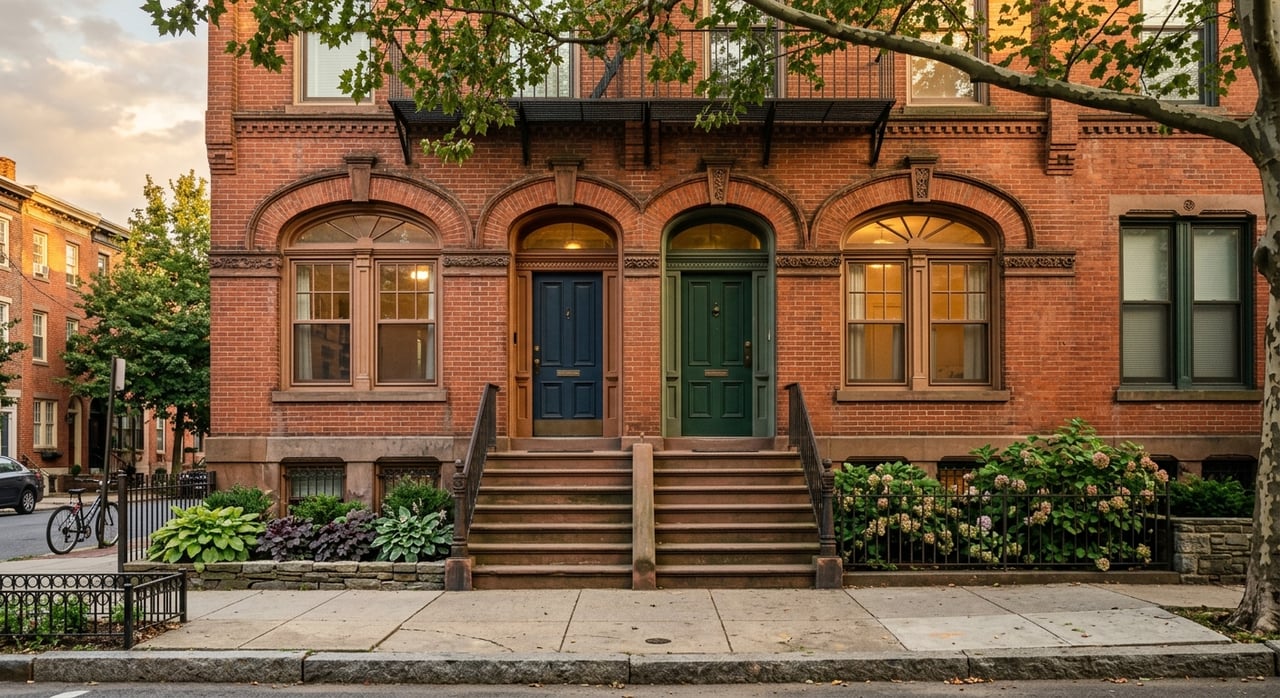
Cambridge condo inventory often stands out for its architectural character. The current mix includes brick Victorians, converted flats, schoolhouse lofts, and a smaller number of newer infill and luxury buildings.
Current examples illustrate that range. A compact unit near Harvard Square at 1572 Massachusetts Ave #41 is listed at $510,000, while 276 Harvard St #6, a two-bedroom brick Victorian condo, is listed at $925,000. A schoolhouse loft at 69 Harvey St #3 is listed at $1.2 million, and 2240 Massachusetts Ave #3, a two-bedroom, two-bath unit, is listed at $859,000.
In practical terms, a Cambridge budget often buys you a more historically distinctive setting or a more amenity-rich building. That is not a rule for every listing, but it is a noticeable pattern in the current inventory.
Cambridge product at a glance
You may see more of the following in Cambridge:
- Brick Victorian conversions
- Older flats with period detail
- Schoolhouse or loft-style spaces
- Condos in established, centrally located buildings
- Smaller footprints at higher price points
What your budget tends to buy in Somerville
Somerville’s condo stock often leans toward triple-decker conversions, renovated two-family homes, townhome-style condos, loft-style units, and newer infill or new-construction product.
Current listings show that variety. Examples include 19 Day St #1, a four-bedroom townhome-style condo in a 1900 building, 7 Durham St #1, a 2015-built three-bedroom townhouse at $1.495 million, and 21-R Kent Ct Unit C, a new-construction three-bedroom at $1.5999 million. At a different price point, 76 Flint St #1 is a renovated three-bedroom, two-bath condo listed at $898,000.
In many cases, a similar budget in Somerville may buy you more square footage, a newer renovation, outdoor space like a deck or roof deck, or parking. Again, that is a pattern in current listings rather than a guarantee, but it is one reason buyers often cross-shop these two markets so closely.
Somerville product at a glance
You may see more of the following in Somerville:
- Triple-decker condo conversions
- Townhome-style layouts
- Renovated two-family homes
- Newer infill and new construction
- More space or newer finishes at similar price points
Commute and transit can shift the decision
For many buyers, the Cambridge versus Somerville decision is really a lifestyle and commute decision. Both cities are highly walkable, with current Redfin Walk Scores of 90 for Cambridge and 89 for Somerville.
Cambridge reports 27 MBTA bus routes, a commuter rail station, and 6 stations on the Red and Green Lines, along with service such as EZRide, the Alewife Loop, and the M2 shuttle. Somerville reports 14 bus routes and heavy-rail service on the Red, Orange, and Green Lines.
Somerville’s transit map changed significantly with the Green Line Extension. The city says the GLX runs 4.7 miles through Somerville and Medford, adds five new Somerville stations, and places 85% of Somerville residents within a half-mile of a subway station.
That means the better choice often depends on your own routine. If your week revolves around a particular line, station area, or commuting pattern, that may matter more than a citywide price average.
Location patterns buyers often compare
Based on current listing and transit patterns, Cambridge buyers often focus on areas tied to Harvard, Kendall/MIT, East Cambridge, Porter, Cambridgeport, and Mid-Cambridge. In Somerville, buyers often cross-shop Union Square, Davis, East Somerville, Winter Hill, Magoun Square, and areas near Tufts.
The key is not to assume one city is universally better. It is to match the condo, the block pattern, and the transit access to how you actually live.
If you work from home most days, your priorities may be square footage, natural light, or outdoor space. If you commute often, station access and route flexibility may carry more weight.
Recent examples show the range
Recent sales and listings make the price overlap easier to see. In Cambridge, examples include 17 Marie Ave #3 at $1.02 million, 60 Crescent St #2 at $750,000, and 69 Harvey St #1 at $815,000.
In Somerville, examples include 94 Beacon St #83 at $507,000, 43 Park St #18 at $1.275 million, and the active 76 Flint St #1 at $898,000. Together, those examples show how both markets can span from entry-level one-bed options up into renovated or townhome-style homes above the $1 million mark.
This is why broad averages only tell part of the story. The better question is often not “Which city is cheaper?” but “What does my budget buy in each city right now?”
How to choose between Cambridge and Somerville
If you are deciding where to focus your search, it helps to think in tradeoffs instead of headlines. Both cities can be competitive, both offer strong walkability, and both have condo options across a wide price range.
Cambridge may be the stronger fit if you are drawn to classic architecture, established building stock, and a location tied to specific Cambridge destinations or transit nodes. Somerville may be the stronger fit if you want more space, newer finishes, townhome-style living, or access shaped by the expanded Green Line map.
A smart search usually starts by narrowing these factors:
- Your real budget, including monthly carrying costs
- The amount of space you need now and in a few years
- Your preferred building type and layout
- Commute patterns and station access
- Features that matter most, such as parking, outdoor space, or renovation quality
When you compare properties this way, the Cambridge versus Somerville question becomes much easier to answer.
If you want help sorting through the tradeoffs, pricing realities, and neighborhood fit, Corinne Schippert can help you evaluate the market with clear data, local insight, and a strategy built around how you actually want to live.
FAQs
How much more expensive are Cambridge condos than Somerville condos?
- Year to date through March 2026, the median condo sales price was $913,000 in Cambridge and $850,000 in Somerville, a difference of about $63,000.
Do Somerville condos sell faster than Cambridge condos?
- Based on year-to-date MAR data and current listing snapshots, Somerville has recently shown somewhat shorter market times, but both cities can move quickly depending on price point, condition, and inventory mix.
What types of condos are common in Cambridge?
- Cambridge condo inventory often includes brick Victorians, converted flats, schoolhouse lofts, and some newer infill or luxury buildings.
What types of condos are common in Somerville?
- Somerville often features triple-decker conversions, renovated two-family homes, townhome-style condos, loft-style units, and newer infill or new-construction homes.
Is Cambridge or Somerville better for transit access?
- Both are highly walkable and transit-rich, but the better fit depends on your route. Cambridge has broad Red and Green Line access plus more bus routes, while Somerville gained major subway access through the Green Line Extension and now reports that 85% of residents are within a half-mile of a subway station.
Should buyers compare overall home prices or condo prices in Cambridge and Somerville?
- If you are buying a condo, condo-specific data is usually more useful because the price gap between the two cities is much narrower for condos than it is for the overall housing market.