Thinking about moving up but not sure whether Arlington or Belmont gives you the better next step? That is a common question for homeowners who want more space, a different commute setup, or a home with a stronger architectural presence without losing sight of budget. The good news is that both towns offer strong options, but the tradeoffs are real. Here is how to compare Arlington and Belmont for your move-up home so you can focus on the choice that fits your goals.
Price: Arlington Usually Costs Less
If budget efficiency matters, Arlington currently offers a lower median sale price than Belmont. Over the three months ending May 2026, Arlington’s median sale price was $1,149,312, compared with $1,413,654 in Belmont.
That puts Belmont about $264,342 higher, or roughly 23% more. For many move-up buyers, that gap shapes everything from down payment planning to how much home, lot size, or renovation potential you can realistically target.
Current listings show a similar pattern. In Arlington, inventory ranges from smaller condos in the low-$300,000s to larger homes above $2.3 million. In Belmont, smaller units start higher, around $450,000 to $739,000, and larger homes run from about $1.05 million to $4.5 million.
What this means for your next move
If your goal is to move into a larger home without making as big a jump in monthly cost, Arlington may give you more flexibility. If you are comfortable stretching further for location, lot scale, or housing character, Belmont may feel like the stronger fit.
Competition: Both Markets Move Fast
Price is not the only story. Arlington and Belmont are both highly competitive markets, which matters if you are trying to sell one home and buy another on a tight timeline.
Arlington averaged 4 offers and 15 days on market. Belmont averaged 7 offers and 16 days on market. In other words, Belmont is more expensive and may bring even more offer pressure, but neither town gives buyers much room to move slowly.
For a move-up buyer, that means preparation matters. You want a clear budget, financing readiness, and a realistic sense of what your must-haves are before the right home appears.
Lot Size: Belmont Often Offers Bigger Settings
One of the biggest differences between Arlington and Belmont is how lot size tends to show up in the housing stock.
Arlington’s planning guidance describes a wide range of lot sizes. Some two-family areas are under 5,000 square feet, while single-family lots can range from under 5,000 to 6,000 square feet on the smaller end, 5,000 to 9,000 square feet for medium lots, and more than 9,000 square feet for larger lots.
Belmont zoning is more segmented, with minimum lot sizes that include 5,000 square feet in GR districts, 9,000 square feet in SR-C, 12,000 square feet in SR-B, and 25,000 square feet in SR-A and SR-D. That structure helps explain why Belmont is often associated with more spacious lot patterns in some areas.
How lot size affects your decision
If you want a larger yard, more separation between homes, or a setting that feels more expansive, Belmont may rise to the top. If you are looking for a practical step up in size without paying as much for land, Arlington may offer a more efficient path.
Housing Style: Character Shows Up Differently
Move-up buyers are often choosing not just square footage, but also a certain type of home.
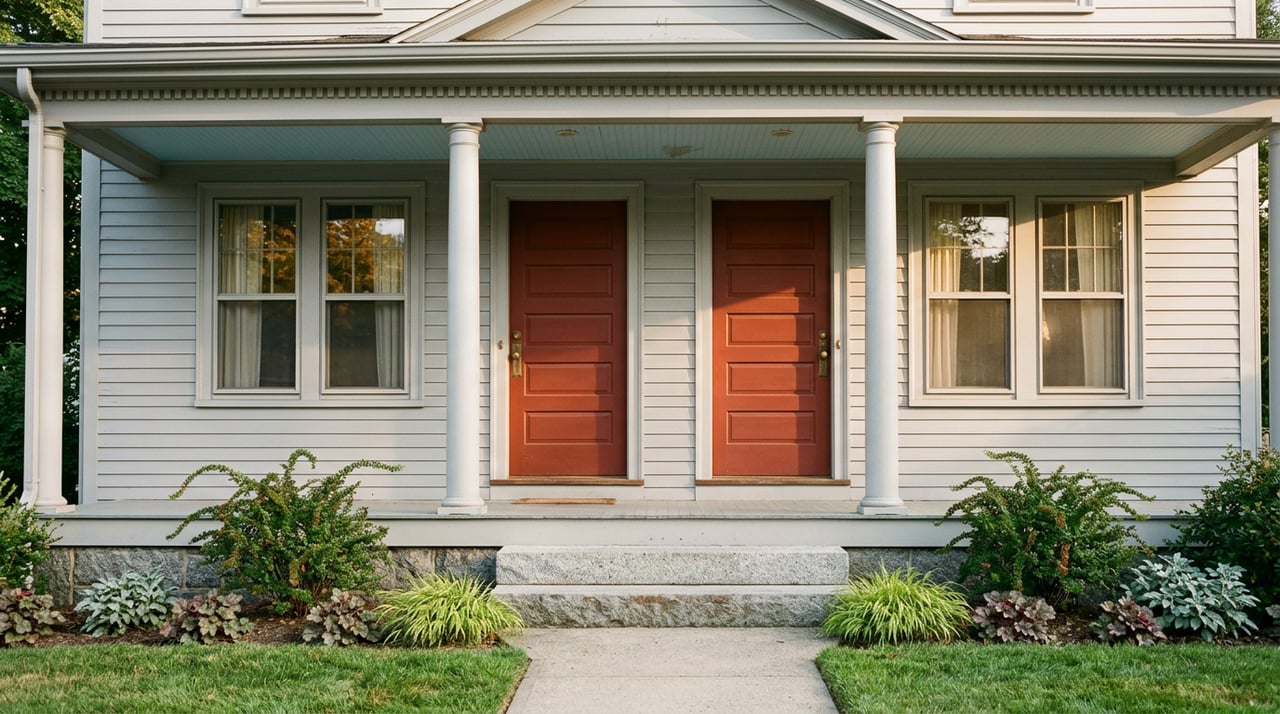
In Arlington, smaller-lot areas tend to include capes, bungalows, and smaller Colonials. Larger-lot areas are more likely to include Victorians, large Colonials, and Colonial or Ranch houses. That creates a mixed housing stock with several price points and home styles.
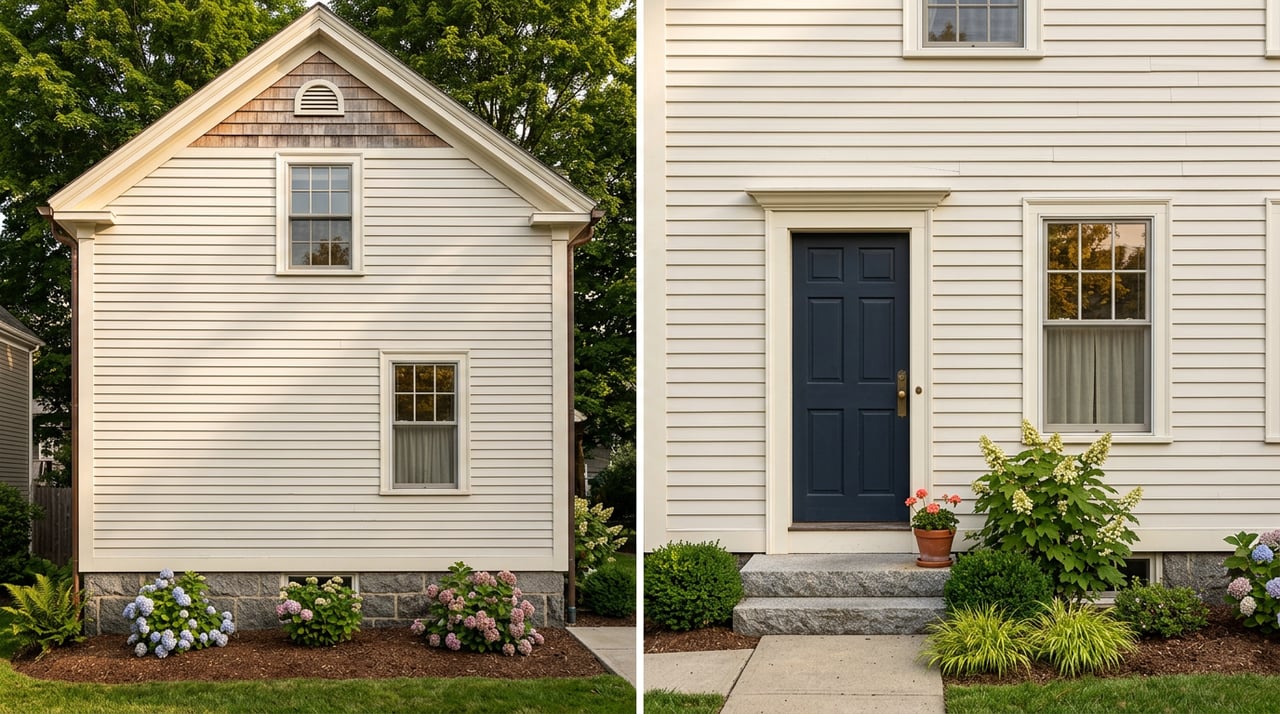
Belmont’s historic-resource materials describe a broad architectural mix that includes Colonial Revival, Dutch Colonial, Tudor Revival, Craftsman or Bungalow, and English Revival or Arts & Crafts. The town also notes neighborhoods with large estate-like parcels, spacious lots, and extensive landscaping.
What kind of home are you picturing?
If you are drawn to a broad range of housing options and want more room to balance style with price, Arlington may give you more combinations to choose from. If you place extra value on older architectural character and larger-lot surroundings, Belmont may better match that vision.
Commute: Bike-and-Bus Versus Added Rail Access
Commute patterns can be just as important as the house itself, especially if your next move needs to work for more than one person in the household.
Arlington relies heavily on bus service and the Minuteman Bikeway. The town says it is served by 12 bus routes, with major destinations including the MBTA bus terminal on Massachusetts Avenue and Alewife Station. East Arlington also offers access to the Red Line connection at Alewife by bus or bike.
Belmont adds commuter rail to the transportation picture. Town materials say Belmont is a commuter-rail community, with Belmont Center served by bus routes 74 and 75, Waverley Station on the Fitchburg Line, Route 73 linking Waverley Square to Harvard, and Routes 62 and 67 connecting toward Alewife.
Which commute setup fits better?
If your daily routine works well with bus service, biking, and Alewife access, Arlington may feel straightforward and efficient. If your household wants one more transit option in the mix, especially commuter rail, Belmont may offer added flexibility.
Move-Up Timing: Plan the Sale and Purchase Together
Even when you are choosing between two towns, timing can be just as important as location.
Spring is still considered the classic selling season, and on the East Coast, May tends to be strongest. Total homes for sale usually peak later in spring and summer, which can give buyers more choices but also means more competition among sellers.
Because both Arlington and Belmont move quickly, a move-up seller often benefits from getting the current home ready before the search becomes urgent. When homes can go pending in about two weeks, it helps to have your pricing plan, photos, home prep, and financing lined up early.
A 2025 survey cited by Redfin found that staging can increase the dollar value offered and reduce time on market. That can matter even more when you are trying to coordinate a sale and a purchase at the same time.
A practical sequence to consider
For many move-up households, this sequence is the safest place to start:
- Prepare your current home early
- Get preapproved or otherwise financing-ready
- Clarify your target budget and must-haves
- Begin your search with a plan for timing and possession
- Discuss options such as rent-backs or short-term bridge solutions if needed
Arlington May Fit You Best If...
Arlington may be the better move-up choice if you want to stretch your budget further while still gaining space. It can also be a strong fit if you like a mixed housing stock and want a commute pattern centered on buses, biking, and Alewife access.
For some buyers, Arlington offers the more achievable next rung on the ladder. You may not have to jump quite as far in price to get into a meaningfully larger home.
Belmont May Fit You Best If...
Belmont may be the better fit if you are willing to pay more for larger-lot settings, added rail access, and stronger historic-character signals in the housing stock. It may also appeal to buyers who want a more compact town fabric paired with a wider range of transit options.
For some move-up buyers, Belmont is less about getting more house for the money and more about getting a specific type of setting. If that setting matters enough, the price premium may feel worthwhile.
The Bottom Line
Arlington and Belmont are both strong choices for a move-up home, but they solve different problems. Arlington usually offers better price efficiency and a varied housing mix, while Belmont usually comes with a higher price tag, more rail flexibility, and more signs of larger-lot living.
The right answer depends on what you want your next move to accomplish. If you are weighing space, budget, commute, and timing all at once, a clear side-by-side strategy can make the decision much easier.
If you want help thinking through the tradeoffs, timing your sale and purchase, or narrowing your target in Arlington or Belmont, Corinne Schippert can help you build a smart, grounded plan.
FAQs
What is the price difference between Arlington and Belmont for move-up homes?
- Over the three months ending May 2026, Arlington’s median sale price was $1,149,312 and Belmont’s was $1,413,654, making Belmont about 23% more expensive.
Which town is more competitive for homebuyers, Arlington or Belmont?
- Both are very competitive. Arlington averaged 4 offers and 15 days on market, while Belmont averaged 7 offers and 16 days on market.
Does Belmont usually have larger lots than Arlington?
- Belmont’s zoning includes several larger minimum lot sizes, including 9,000, 12,000, and 25,000 square foot districts, which supports the idea that some Belmont areas offer more spacious lot patterns.
Is Arlington better for commuting to Alewife?
- Arlington is closely tied to bus service and bike access to Alewife, especially from East Arlington, which can make it a practical choice for households centered on Red Line access.
Does Belmont have commuter rail access?
- Yes. Belmont is a commuter-rail community, and Waverley Station is on the Fitchburg Line.
When should you prepare your current home for a move-up purchase in Arlington or Belmont?
- Because both markets move quickly, it is often smart to prepare your current home, get financing ready, and clarify your plan before your search becomes time-sensitive.