A week before closing, most of the paperwork on a Cambridge condo sale is already routine. The purchase and sale agreement is signed. The inspection contingency has come and gone. Then someone on the closing team asks whether the seller has requested the 6(d) certificate yet, and if the building is a small, self-managed conversion, that single line item can become the thing that decides whether the closing happens on schedule.
Every Massachusetts condo sale needs one of these certificates. Almost nobody outside real estate and closing law thinks about them until they show up as a line item on a closing checklist, and by then the clock is already running.
What the certificate actually does
Under Massachusetts General Laws Chapter 183A, Section 6(d), a condo association has to issue a signed statement showing what a unit owner currently owes in common expenses and assessments, and it has ten business days from a proper written request to do it. When the statement shows nothing owed, it is what practitioners call a clean certificate, and it is that clean status that legally discharges the association's lien on the unit. When it shows an unpaid balance, it is a dirty certificate, and that balance typically has to be paid from the seller's proceeds at closing before the buyer's lender will fund.
The reason lenders and title companies treat this document as non-negotiable rather than routine paperwork comes down to one feature of the statute: a condo association's lien for unpaid common expenses carries a "super-lien" priority over even a first mortgage for a limited period, usually described as up to six months of unpaid charges. A buyer who closes without a clean certificate can, in theory, inherit a debt that jumps ahead of their own mortgage in priority. No lender wants that exposure, and no title company will insure around it.
Clean is a snapshot, not a forecast
Here is the part that gets missed in most condo closings, including in Cambridge's older buildings. The certificate answers one question: what does this unit owe as of the date it was signed. It does not answer the question a buyer actually cares about, which is whether the building's finances are in good shape going forward. A unit can carry a spotless 6(d) certificate and still sit inside a building that is about to vote on a roof assessment, an elevator modernization, or a facade repair that was flagged in last quarter's board minutes but has not yet been formally levied. Nothing in the statute requires the certificate to mention a project that is under discussion but not yet assessed.
That gap between what has already been billed and what is coming matters more in some buildings than others, and it happens to matter most in exactly the kind of building that is common across Cambridge.
Why the gap is wider in Cambridge
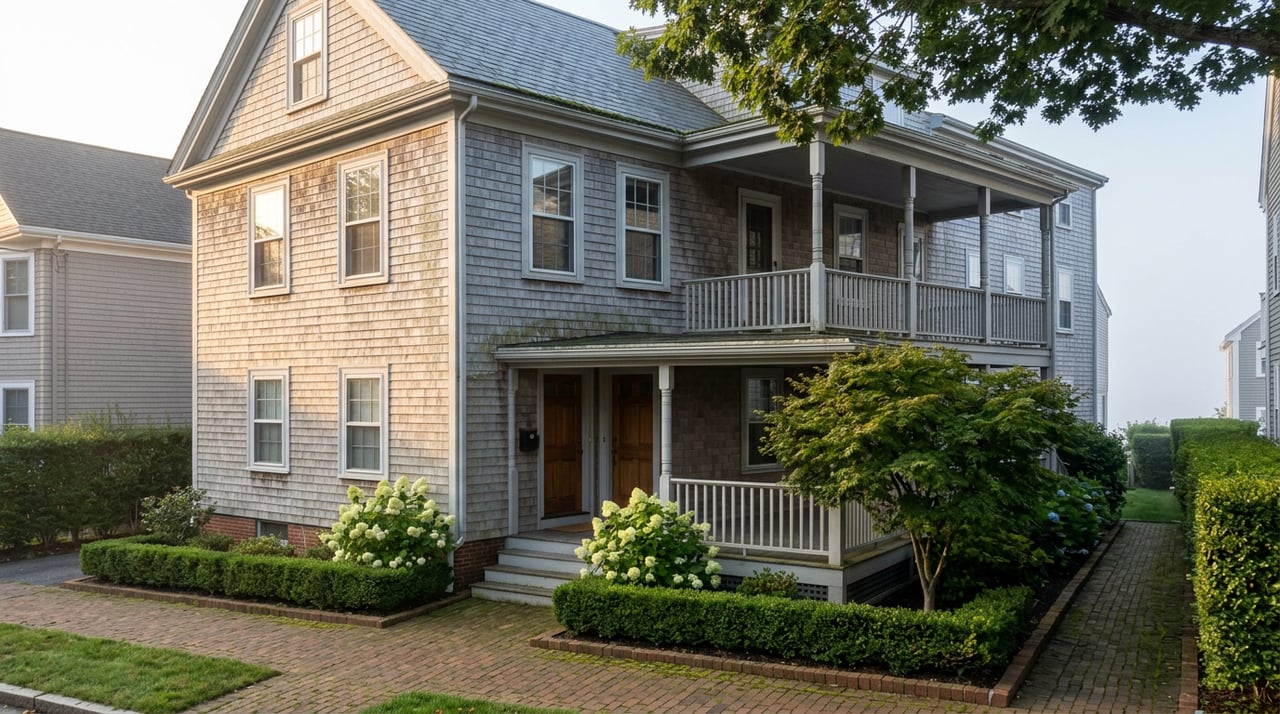
Cambridge has a large stock of small condo conversions, the two- and three-unit buildings carved out of older triple-deckers in neighborhoods like Cambridgeport and mid-Cambridge. These associations are frequently self-managed rather than run by a professional management company, which changes two things at once. First, the certificate itself can take longer to produce, because it has to be signed by trustees in front of a notary, and a volunteer board without a management company on retainer has to coordinate that manually rather than through an office with a standing process. Second, and more consequential for a buyer, small associations tend to keep monthly dues lower and reserve funds thinner than larger, professionally managed buildings, which raises the odds that a big capital repair gets handled through an incremental special assessment rather than a planned reserve draw.
Put those two facts together and the pattern is not a coincidence. The same structural feature, an association without a professional manager and without deep reserves, is what slows down the certificate and what makes an undisclosed future assessment more likely. A buyer who treats a clean 6(d) as proof that a small Cambridge conversion is financially sound is checking the box the statute actually requires while skipping the one that matters more.
| Small self-managed conversion | Larger professionally managed building | |
|---|---|---|
| Typical reserve posture | Thinner, sometimes underfunded relative to age of building | Larger, guided by a formal reserve study |
| Certificate turnaround | Can run past the 10 business day window while trustees coordinate signatures | Usually handled on a standard timeline by the management office |
| Assessment pattern | More likely to rely on incremental special assessments for capital work | More likely to fund capital work from existing reserves |
| What to request beyond the certificate | Recent board minutes, current budget, any reserve study on file | Same documents, typically easier to obtain quickly |
The carrying-cost math that makes this matter
A clean certificate protects a buyer from inheriting past debt. It says nothing about the monthly math a buyer is signing up for going forward, and in Cambridge that math already has little room in it. Cambridge's fiscal year 2026 residential tax rate is $6.67 per $1,000 of assessed value. On a condo priced near the city's recent citywide median for market-rate sales, which has been running around $870,000, that works out to roughly $5,803 a year in property tax alone, before a single HOA payment.
Layer in monthly association dues, which across Cambridge's condo stock commonly run from about $250 a month in simpler, smaller associations up to $700 or more in amenity-rich buildings, and a buyer is often carrying somewhere between $8,000 and $14,000 a year in taxes and fees before mortgage principal and interest enter the picture. An unplanned special assessment landing on top of that budget is not a minor inconvenience. It is a real strain on a monthly number that was already tight, which is exactly why the documents a buyer reviews before offering matter as much as the closing documents the attorneys exchange at the end.
What buyers should actually ask for
A clean 6(d) certificate is necessary, but it is not the research. Before writing an offer on a Cambridge condo, especially a smaller conversion, it is worth asking the listing side for the current budget, the most recent reserve study if one exists, board meeting minutes from the past year, and a delinquency report showing how many owners are current on their dues. None of that is exotic or adversarial to request. It is the same information any careful buyer's attorney would ask for anyway, and asking early gives a buyer time to price in a known risk rather than discovering it after closing when the option to walk away or renegotiate is gone.
What sellers should do before listing
For sellers in a self-managed building, the fix is mostly about lead time. Requesting the 6(d) certificate the same week an offer comes in is often too late, since a volunteer board needs time to schedule a signing, get it notarized, and confirm the numbers match the association's books. Starting that request as soon as a listing goes active, rather than waiting for an accepted offer, removes one of the more common sources of last-minute closing delay. It is a small piece of pre-listing preparation, but it sits alongside the pricing and presentation work that keeps a transaction moving on schedule instead of stalling in its final week.
A few questions worth asking first
What happens if the certificate isn't ready by the scheduled closing date? Closings sometimes proceed anyway. The usual workaround is an escrow holdback, where the closing attorney sets aside funds to cover the unresolved balance until a clean certificate is issued and recorded. It is a workable fix, but it depends on tight coordination between both sides' attorneys, not something to count on as a default plan.
Does a clean certificate protect a buyer from an assessment approved right after closing? No. The certificate speaks only to what is owed as of its signing date. A board can vote on a new assessment the week after closing, and the new owner is the one who owns it.
Who is responsible for requesting the certificate? In practice it is usually the seller or the seller's attorney, since the seller is the one clearing the lien before transferring the unit, even though the buyer's lender is the party requiring it.
Does a two-unit building without a full board change anything? It can. Very small associations sometimes have a vacant trustee seat or an informal arrangement that was never properly documented, and confirming who has legal authority to sign the certificate is worth doing early rather than discovering a signature problem days before closing.
None of this makes the 6(d) certificate less important. It makes it exactly what the statute intended: proof of what has already been settled, not a guarantee of what comes next. In a city where a large share of the condo stock is small, older, and self-managed, that distinction is worth understanding well before an offer is on the table.
If you are weighing a condo purchase or a sale in Cambridge and want a clear read on a specific building's documents and what they actually cover, Corinne Schippert can walk through it with you. Let's Connect.