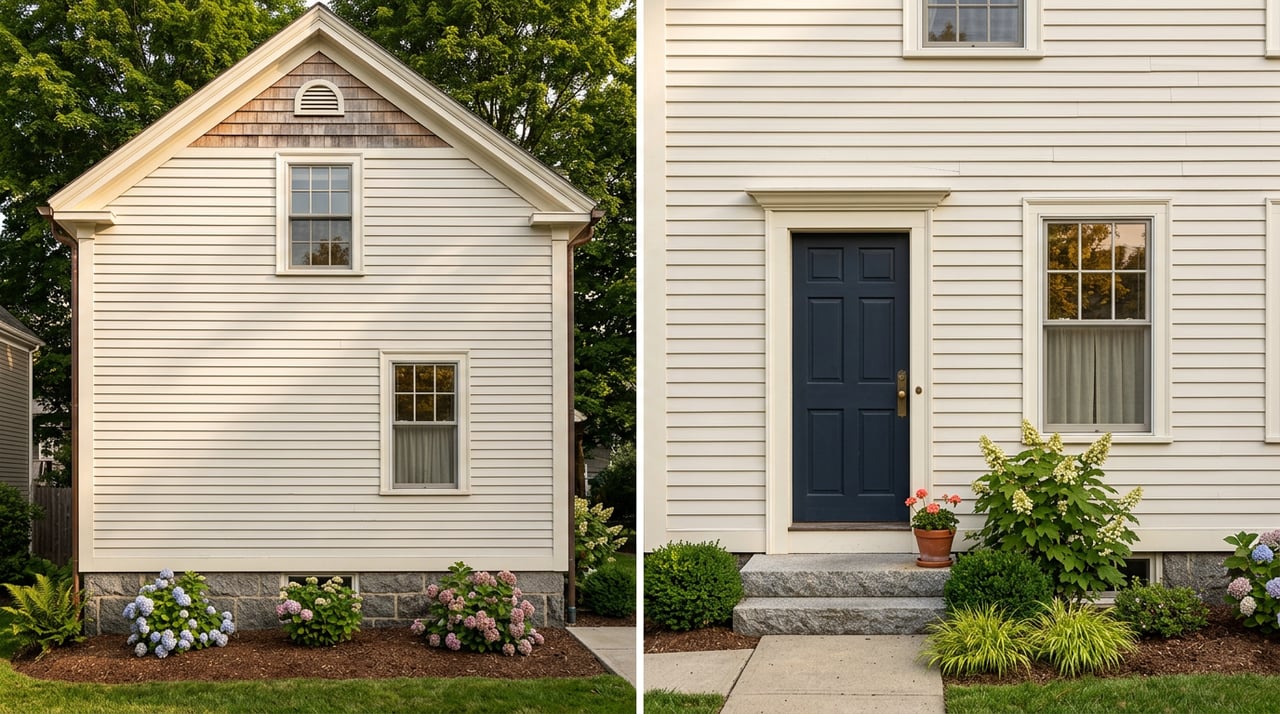
A seller in East Arlington lists a colonial built in the 1920s. She assumes her house falls under the oldest, most forgiving set of smoke detector rules, the ones written for homes older than the state building code itself. What she has forgotten is the kitchen renovation from nine years ago, the one that pulled a permit. That permit reset the clock. Her house now has to meet a newer standard than its birth year would suggest, and she finds this out three weeks before closing, when the fire department shows up to inspect a system that was never upgraded to match.
This is the piece almost every generic guide to Massachusetts smoke detector law leaves out, and it happens to be the piece that matters most in a town like Arlington.
The number that actually decides your requirements
Every home sale in Massachusetts requires a Certificate of Compliance from the local fire department confirming that smoke and carbon monoxide alarms meet code. That much is well known. What trips people up is the date used to determine which code applies. It is not the year the house was built. It is the date of the last building permit, if one was ever pulled for a renovation, addition, or modification.
Mass.gov's own guidance for sellers walks through this directly: find out when your home was built and the date the last building permit was issued, then use both to figure out which tier applies. The tiers break down roughly like this:
- Built or last permitted before January 1, 1975: the most flexible standard, generally allowing battery-powered detectors.
- Permitted between 1975 and August 27, 1997: hardwired detectors required, interconnected in most configurations.
- Permitted between August 27, 1997 and January 1, 2008: hardwired, interconnected, photoelectric near kitchens and bathrooms.
- Permitted after January 1, 2008: the strictest tier, hardwired, interconnected, photoelectric throughout.
A house can be a century old and still land in that last tier, if a bathroom remodel in 2015 pulled a permit. Nobody's system gets grandfathered forever. The renovation is the trigger, not the year on the deed.
Why this bites harder here than in most towns
Arlington's housing stock skews old in a way that makes this permit-date mechanic especially relevant. The town's own Master Plan housing analysis puts the median year of construction at 1931, with an average unit age of 81 years. Separate housing data shows nearly half the town's homes were built before 1939.
That means most Arlington sellers are not walking into a clean, single-tier situation. They are walking into decades of accumulated renovation history, some documented, some not, and the fire department will ask about all of it. A pre-1975 colonial that never touched a building permit is one thing. The same colonial with a 2003 addition or a 2016 kitchen gut is a different animal entirely, and the seller often does not know which one they own until they call the building department to check.
If you are planning to sell an older Arlington home, the smart move is to pull your own permit history before you assume anything about which tier applies. The town's building department can confirm the date of the last permit on file, and that single date will tell you more about your inspection requirements than the year stamped on your deed ever will.
The two-family fork that catches people off guard
Arlington is not a single-family town in the way some of its neighbors are. Two-family and small multi-family dwellings make up close to a third of all housing units here, a legacy of the streetcar-suburb development pattern that shaped much of East Arlington and the neighborhoods along Massachusetts Avenue. That matters for this inspection because Arlington splits its scheduling process by property type, and a lot of sellers assume the process is the same for every home.
It is not.
| Property type | How to schedule |
|---|---|
| 1 and 2 family homes, condos | Online scheduler through the Town of Arlington Fire Prevention Division |
| 3 family or larger, renovations, new construction | Direct contact with Deputy Chief Ryan Melly at [email protected] or 781-316-3803 |
A seller who owns a two-family and clicks the online scheduler assuming it works the same way for a three-family down the street will find nothing there for their property. Anyone selling a triple-decker, a converted multi-unit, or a home with a recent renovation needs to go straight to Deputy Chief Melly rather than hunting through a self-service form that was not built for their situation. In a town where multi-family properties are this common, that fork in the process is not a minor detail. It is the difference between scheduling in one phone call and losing a week figuring out who to call.
The window is narrower than the calendar suggests
Even once you know which track to use, Arlington's inspection hours are limited. Sale-related smoke and CO inspections run Monday through Friday, one to four in the afternoon, scheduled by calling 781-316-3800. That is a three-hour window, five days a week, shared across every home sale currently moving toward closing in town.
During a busy spring or summer market, when a large share of Greater Boston listings are trying to close in the same eight-week stretch, that window fills up fast. If you wait until your purchase and sale agreement is signed to think about this inspection, you are competing with every other Arlington closing scheduled for the same month. The sellers who avoid last-minute scrambles are the ones who call as soon as they have a closing date in hand, not the ones who wait until the closing attorney asks for the certificate.
What actually fails an inspection
The mechanics of failure are usually mundane, but they are worth knowing before the fire department arrives rather than after. Detectors older than ten years fail automatically, since Massachusetts requires replacement regardless of whether the unit still sounds fine. Disconnected hardwired units fail even if every other detector in the interconnected system works. Mismatched brands in a system that is supposed to be interconnected can also cause a failure, since not all detectors talk to each other across manufacturers.
There is one more detail that catches people off guard because it has nothing to do with detectors at all. Massachusetts law also requires that a home's street number be clearly visible from the street, and fire departments frequently check this during the same visit. A seller who has never thought twice about a faded house number can fail an otherwise perfect inspection over it.
The certificate has a shorter shelf life than you might expect
Once you pass, the state's own certificate form notes that a Certificate of Compliance expires 60 days after the date it is issued. If your closing slips past that window, for any reason unrelated to the inspection itself, you will need a new one. This is worth building into your timeline deliberately. Schedule too early relative to your closing date and you risk the certificate lapsing before you actually need it. Schedule too late and you risk not getting an appointment in time at all. The sweet spot is close enough to closing that the 60 days comfortably covers any reasonable delay, but early enough that a failed first attempt still leaves room to fix problems and get reinspected.
A few questions sellers ask first
Does a pre-1975 house ever need hardwired detectors? Only if a permit was pulled for renovation, addition, or modification after 1975. The permit date, not the build date, decides this.
What if I do not know when my last permit was pulled? Arlington's building department can tell you. This is worth confirming before you schedule the fire inspection, not after.
Can I use the online scheduler for a two-family? Yes, the online scheduler covers 1 and 2 family homes and condos. Anything larger, or any property with a recent renovation, goes through Deputy Chief Melly directly.
Selling an older home in a town like Arlington means managing a handful of these small, procedural details alongside the bigger decisions about pricing and presentation. None of it is complicated once you know where the friction points actually are. If you are weighing a sale and want a clear-eyed read on what your specific property will need before it hits the market, Corinne Schippert has spent years walking Arlington sellers through exactly this kind of preparation. Let's Connect and get your timeline mapped out properly.